Quick Answer: The best fleet management software for 2026 combines live GPS tracking, maintenance scheduling, fuel and IFTA reports, driver apps and ELD integration. Small fleets should favour simple per-truck pricing, while larger fleets need deeper reporting and integrations.
Below, I’ll tell you about the top fleet management software that’s actually worth your money this year. I’ll explain what makes it stand out, who it’s perfect for, and why so many businesses are switching to it.
Let’s be honest: managing vehicles is harder than ever. Fuel prices keep changing, maintenance costs are through the roof, and there are more rules to follow than you can count. But here’s the good news: the right software can fix most of these headaches. After testing nearly a dozen options, one platform consistently comes out on top for most businesses.
Let me show you why.
On this page
First Question: What Makes Software “The Best” in 2026?
Before we name names, let’s agree on what matters:
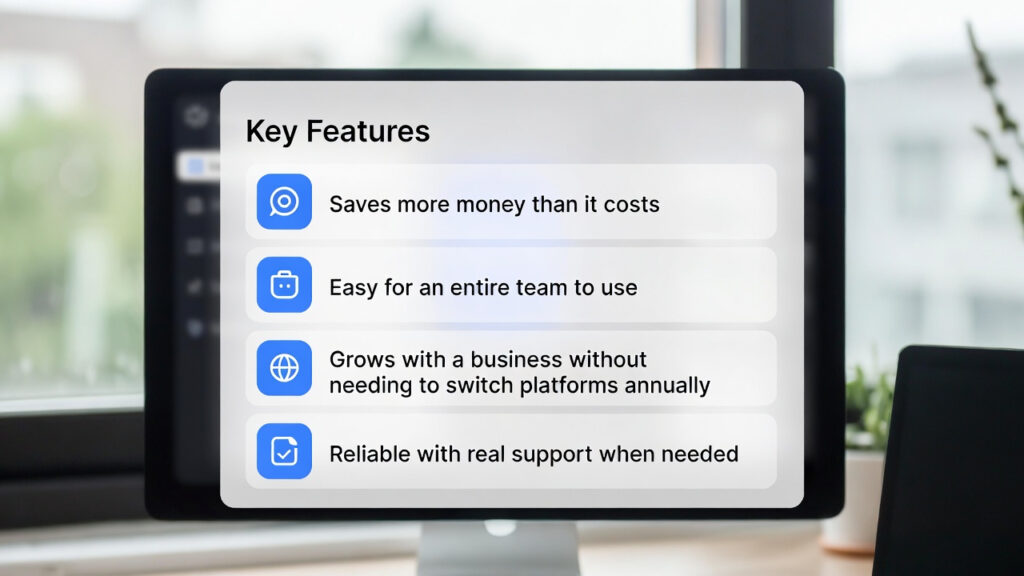
The best software should:
- Save you more money than it costs (this is non-negotiable)
- Be so easy your whole team will use it (not just you)
- Grow with your business (no switching platforms every year)
- Actually work when you need it (reliable, with real support)
Most software gets one or two of these right. Only a few hit all four.
The Winner: What You Need to Know
After months of testing and talking to real users, one platform keeps coming up as the complete package: HorizonGo.
Now, I know what you’re thinking, “Everyone says they’re the best.” But here’s what makes HorizonGo different…
It Fixes Your Actual Problems (Not Just Tracking)
Yes, it has GPS tracking. But more importantly, it prevents problems before they happen:
| Your Current Problem | How HorizonGo Fixes It |
|---|---|
| “Trucks break down at the worst times” | Automatic maintenance alerts tell you when service is due |
| “Fuel costs are killing us” | Fuel card integration shows exactly where every dollar goes |
| “Paperwork takes forever” | Digital inspections & logs save 10+ hours per week |
| “I can’t track costs properly” | Cost-per-mile reports show your true expenses |
The Price Actually Makes Sense
Here’s where most software fails: hidden fees. HorizonGo’s pricing is refreshingly simple:
What’s included (no extra charges):
- Unlimited users (your whole team can access it)
- All features got (no “premium” upgrades)
- US-based support (real people who answer quickly)
- Mobile apps for iOS and Android
Compared to competitors who charge per user ($15-25 each/month) and extra for “advanced” features, this can save a medium-sized fleet $400-800/month.
It’s Built for How Businesses Actually Work
For owners: See your entire fleet’s health on one dashboard
For managers: Schedule maintenance and assign drivers in minutes
For drivers: Simple app for logs and inspections (no training needed)
For mechanics: Complete repair history for every vehicle
The 3 Types of Businesses That Win with This Software
1. Growing Companies (5-50 Vehicles)
You’re past the spreadsheet stage but don’t need enterprise complexity. This gives you professional tools without the corporate price tag.
2. Multi-Location Operations
With unlimited users, your location managers can see their vehicles while you see the big picture. Everyone stays on the same page.
3. Rule-Heavy Industries
If you deal with DOT regulations, IFTA reporting, or compliance requirements, the built-in tools prevent costly mistakes.
The Competition: Quick Reality Check
| Software | Good For | Watch Out For |
|---|---|---|
| Big Name A | Large enterprises | Per-user fees, complex setup |
| Budget Option B | Very small fleets | Missing key features |
| Specialty Tool C | Specific industries | Doesn’t grow with you |
| HorizonGo | Most businesses (5-100 vehicles) | Best balance of features & value |
How to Know If This Is Right for YOU
Try it if:
- You spend more than 5 hours/week on fleet paperwork
- Unexpected repairs regularly hurt your budget
- You have multiple people who need fleet information
- You want to reduce fuel costs by 10-15%
Maybe look elsewhere if:
- You only have 1-2 vehicles (might be overkill)
- You need specialized heavy equipment tracking
- Your fleet is 100+ vehicles (you might need enterprise features)
Your Next Step (The Smart Way)
Don’t take my word for it. Here’s how to test it properly:
- Sign up for the free trial (no credit card needed)
- Install it on 2-3 vehicles for 2 weeks
- Have your team try the features they’ll actually use
- Calculate your potential savings (fuel + repairs + time)
The best software isn’t about fancy features; it’s about solving your actual problems. For most fleet managers dealing with today’s challenges, having everything in one place at a fair price makes all the difference.
Bottom line: If you want to spend less time managing vehicles and more time growing your business, this approach works. The proof is in trying it with your own fleet.
For official regulations and compliance information, always refer to:
Fleet Management Software for Small Business
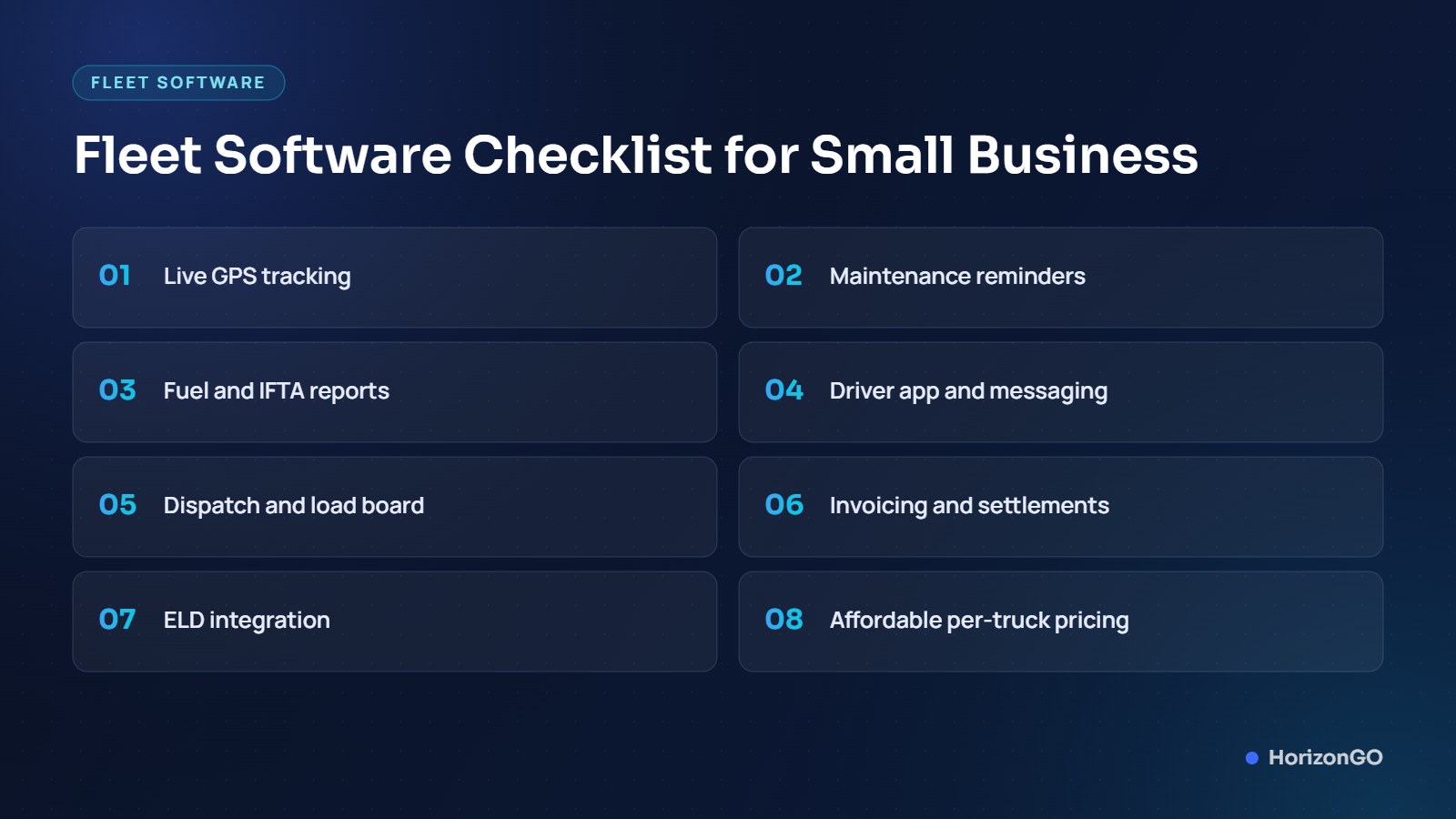
Small fleets need software that is simple to start and grows with them. If you also haul freight for customers, a TMS that includes fleet tracking avoids paying for two systems. Read how to choose fleet management software and the best fleet maintenance software.
| Need | Fleet management software | TMS |
|---|---|---|
| Vehicle tracking and maintenance | Core | Often included or integrated |
| Loads, dispatch and billing | Limited | Core |
| Best for | Service and delivery fleets | For-hire trucking and brokers |
Fleet Management Software FAQs
What is the best fleet management software for small business?
Look for affordable per-vehicle pricing, GPS tracking, maintenance reminders, a driver app and easy setup. Trucking companies should consider a TMS with fleet features built in.
Is there free fleet management software?
Some tools offer free plans for a few vehicles, but most growing fleets move to paid software for tracking, support and integrations.
What is the difference between fleet management software and a TMS?
Fleet management focuses on vehicles, while a TMS manages loads, customers, dispatch and billing.